〈Same Memory, Different Me〉
I do not think of memory as something that simply preserves a moment from the past.
Even when we experience the same event, the way we remember it can change over time.
Even when we experience the same event, the way we remember it can change over time.
This is especially true of painful memories. At first, they may remain vivid and overwhelming. But as time passes, and as we begin to heal and accept what happened, the way we remember those experiences can also change.
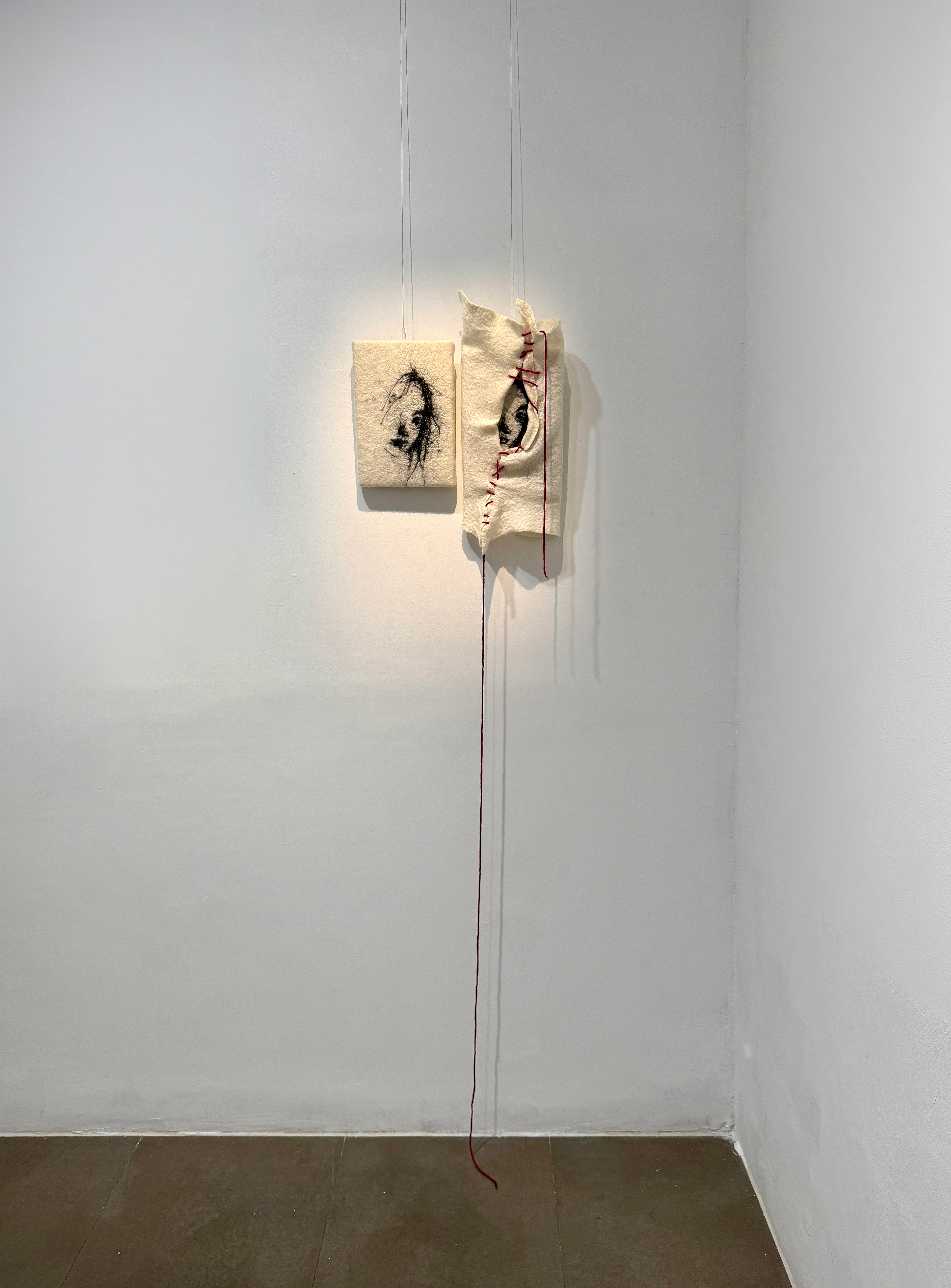
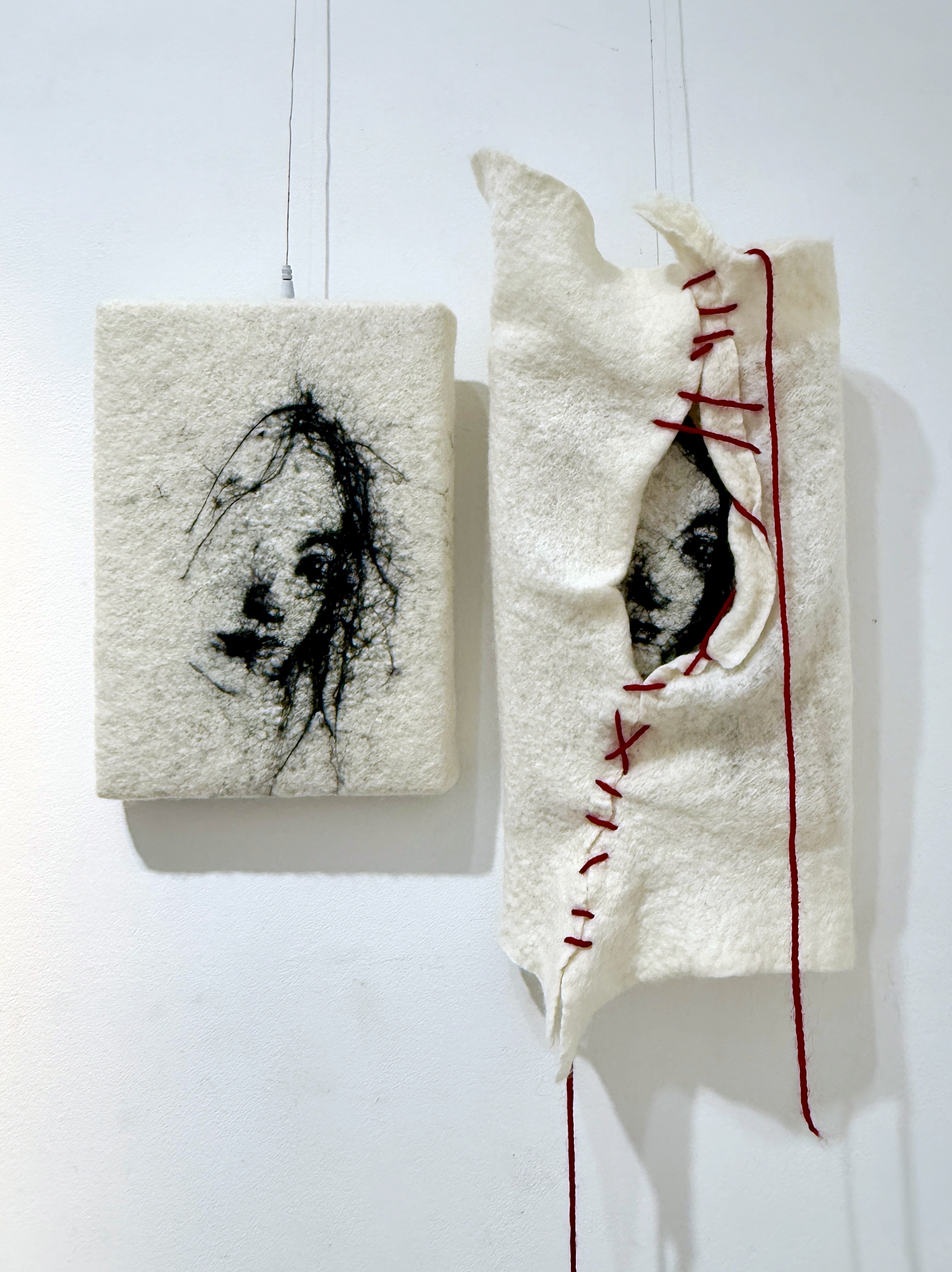
For this work, I created the same person’s face twice.
The two faces belong to the same person and hold the same memory. Yet I wanted to express them in different states: one face remains relatively intact, while the other appears through a torn opening in the felt.
The torn surface and the red thread that runs through it represent a wound left by a painful memory. A wound may never disappear completely, but as it heals, it no longer remains as raw as it once was.
I believe that this is different from simply forgetting.
It is not about erasing a memory, but about changing the way we look at it.
As time passes, we change, and the memory changes with us. The event itself remains in the past, but our feelings toward it can soften, and the memory may gradually lose some of its sharpness.
Perhaps memory does not change on its own.
Perhaps it changes because we change the way we remember it.
Perhaps it changes because we change the way we remember it.
〈같은 기억의 두 얼굴〉
나는 기억이 과거의 한 장면을 그대로 보관하고 있는 것이라고 생각하지 않는다.
같은 일을 겪었더라도 시간이 지나 다시 떠올렸을 때의 기억은 처음과 같지 않을 수 있다.
같은 일을 겪었더라도 시간이 지나 다시 떠올렸을 때의 기억은 처음과 같지 않을 수 있다.
특히 아픈 기억은 더욱 그렇다.
처음에는 선명하고 강하게 남아 있지만, 그 기억을 바라보는 나의 마음이 달라지고 시간이 지나 상처가 조금씩 아물면서 기억의 모습 또한 달라진다고 생각한다.
처음에는 선명하고 강하게 남아 있지만, 그 기억을 바라보는 나의 마음이 달라지고 시간이 지나 상처가 조금씩 아물면서 기억의 모습 또한 달라진다고 생각한다.
그래서 한 사람의 얼굴을 두 번 만들었다.
두 얼굴은 같은 사람이고, 같은 기억을 가지고 있다.
하지만 하나는 기억을 비교적 온전하게 붙잡고 있는 모습으로, 다른 하나는 찢어진 틈 사이로 얼굴이 드러나는 모습으로 표현했다.
하지만 하나는 기억을 비교적 온전하게 붙잡고 있는 모습으로, 다른 하나는 찢어진 틈 사이로 얼굴이 드러나는 모습으로 표현했다.
찢어진 표면과 그것을 이어주는 붉은 실은 아픈 기억이 남긴 상처를 의미한다.
상처는 완전히 없었던 일이 되지는 않지만, 시간이 지나고 내가 그것을 받아들이는 방식이 달라지면서 조금씩 아물어간다.
상처는 완전히 없었던 일이 되지는 않지만, 시간이 지나고 내가 그것을 받아들이는 방식이 달라지면서 조금씩 아물어간다.
그리고 상처가 아물어갈수록 기억은 처음의 선명한 모습에서 조금씩 멀어진다.
나는 그것이 잊는 것과는 다르다고 생각한다.
기억을 지우는 것이 아니라,
그 기억을 바라보는 나의 마음이 달라지는 것.
그 기억을 바라보는 나의 마음이 달라지는 것.
그래서 같은 기억을 가지고 있어도 시간이 흐른 뒤의 나는 그것을 이전과 다른 모습으로 기억하게 된다.
어쩌면 기억은 변하는 것이 아니라,
기억을 바라보는 내가 변하면서 함께 달라지는 것인지도 모른다.
기억을 바라보는 내가 변하면서 함께 달라지는 것인지도 모른다.